My experiments with AI
Notes from someone still figuring it out — as a practitioner, a manager, and an HR leader

Mahatma Gandhi called his autobiography My Experiments with Truth. Not My Findings. Not My Conclusions. Experiments. The word was deliberate , an admission that truth was not something he had arrived at, but something he was perpetually in pursuit of. That the experiment itself was the point.
I have borrowed his title shamelessly, gratefully ,because it is the most honest thing I can call what follows.
This is not a guide to AI. I am not qualified to write one. This is a practitioner’s journal — messy, iterative, occasionally embarrassing of what happens when you stop waiting to be ready and start moving anyway.
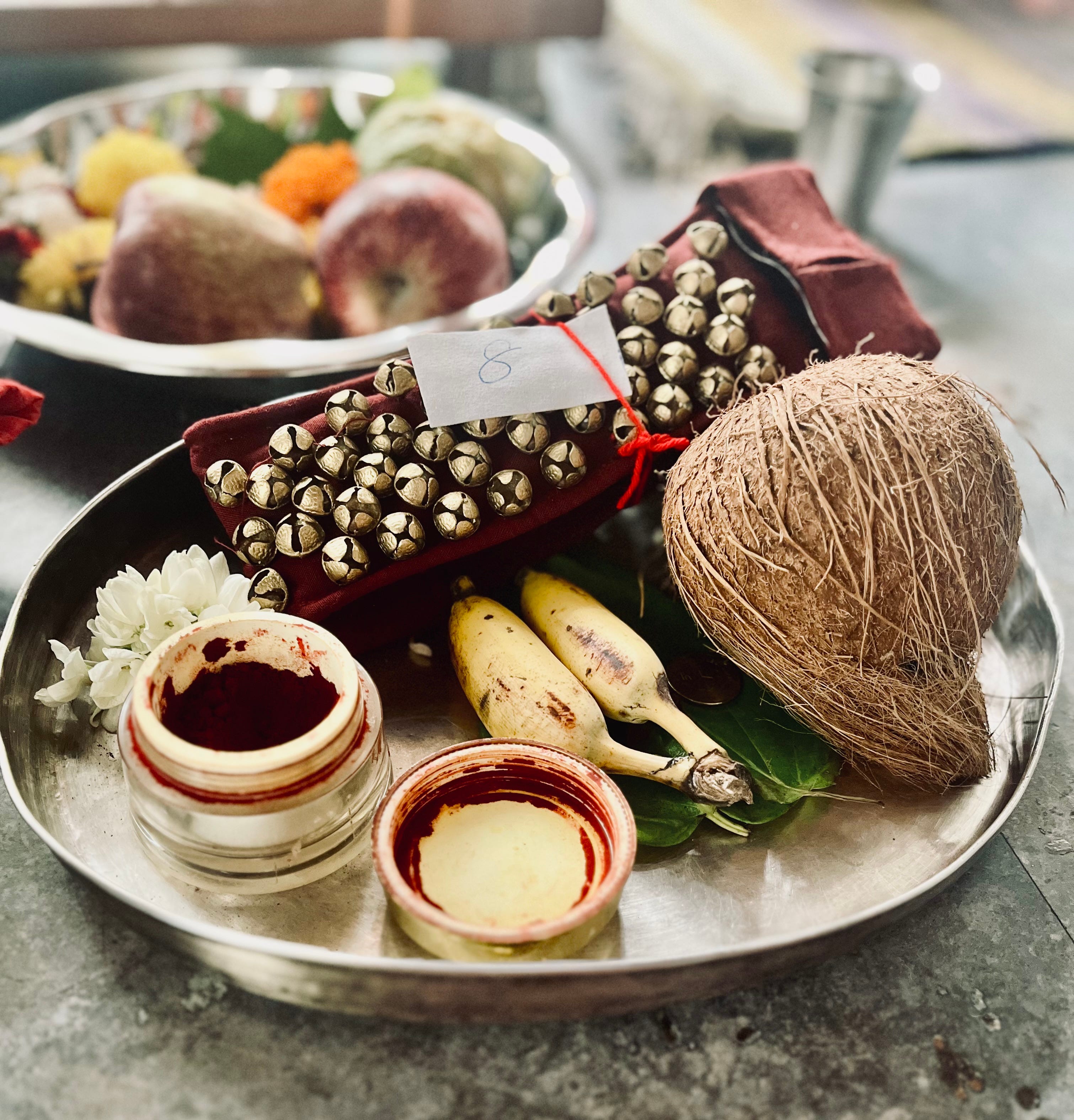
I started learning Bharatanatyam about a year and a half ago. Then a surgery interrupted it — the kind of pause that is easy to make permanent, easy to rationalise as a natural end. Six months ago, I revived it. I started as an adult, which is to say I started with a body that had already made up its mind about what it could and could not do. My guru is patient. My body is not. There are days when I stand in the studio and count every beat consciously — tai tai tam — and the movement is technically correct and completely graceless. There are other days, rare ones, when something releases and for a few bars I stop counting and simply move.
I have been experimenting seriously with AI for roughly the same stretch of time ,on and off for about a year and a half, with real intensity in the last six months. The feeling is identical.
The woman who didn’t wait
Rukmini Devi Arundale did not grow up wanting to dance Bharatanatyam. She came to it sideways , through a chance encounter with Anna Pavlova, the Russian ballerina, on a ship crossing the ocean. Pavlova’s movements undid something in her. She felt, watching a foreign body in a foreign form, the shock of beauty and then, guided by Pavlova herself, turned back toward her own tradition.
She was in her late twenties when she began to learn Bharatanatyam seriously. The dance was, at the time, associated with devadasis and considered disreputable for women of her standing. She learned it anyway. She performed it publicly, to protest and bewilderment, in 1935. Those who were present said it was like watching divinity move.
She did not wait until she was ready. She did not wait until it was safe. She started because she had seen in someone else’s practice, in a foreign art form, in a moment of pure exposure ,what was possible. And that vision was enough to begin.
I think about her often when I sit down to work with AI and feel the familiar resistance. The body that won’t release. The mind that insists on counting instead of moving.
What Rukmini Devi understood — and what I am slowly learning is that grace is not the entry condition. It is the destination. You do not begin with grace. You begin with willingness. And then you show up, again and again, until the counting becomes feeling.
At the individual level: Nritta — learning the steps
In Bharatanatyam, Nritta is pure technique. Form without narrative. The body learning to hold a position, repeat a sequence, build muscle memory it does not yet have. It looks mechanical because it is mechanical. That is the point. You cannot express what you have not yet embodied.
This is where I am with AI. Still largely in Nritta. Still, sometimes, counting out loud.
The honest version of my AI story does not begin with excitement. It begins with a low-grade anxiety I did not fully name for months. My craft ,the thing I have built twenty years of professional identity around is thinking, writing, and building frameworks that help organisations make sense of themselves. And here was something that could approximate all three of those things, at speed, without sleeping.
The question I did not want to ask: what is mine, if this exists?
The question I eventually stopped avoiding: what is now possible, that wasn’t before?
The shift between those two questions is not small. It is the whole thing.
Here is what I have actually built, in the last month, working with Claude — and with other AI tools alongside it:
A keynote presentation for a talk I was giving on culture — one I had been circling for weeks, unable to crack the structure. I brought Claude the rough thinking, the stories I wanted to tell, the audience I was speaking to. What came back was not a deck. It was a thinking partner pushing back on my logic in real time, helping me find the through-line I had been too close to see. The ideas were mine. The deck was mine. The time it took , a fraction of what it would have been.
This essay series. The Operating Layer exists, in part, because AI removed the tax on the distance between having an idea and having a publishable piece. The Asterix framework in the culture essay — that was mine, fully. What changed was the blank page problem. It is gone. The voice is still here. The friction is not.
And then there is the jewellery page.
A few months ago, my dance teacher sent me a WhatsApp message — a list of what she was looking for, styles she liked, occasions she needed pieces for, a rough sense of budget for her students. Half wish list, half conversation. I decided, on a whim, to see what I could build from it. Within an afternoon, working with Claude, I had a structured shopping guide — categorised by jewellery, buyers, with context she could actually use.
I am an HR professional. I have no background in product, UX, or retail curation. The walls between what I could do and what I couldn’t were something I had simply never questioned. And then, quietly, they weren’t there anymore.
And the list keeps growing. I have built dashboards to track things I used to manage in my head. I have used Cowork , an AI tool that works directly on my desktop — to organise files I had been meaning to sort for months, in an afternoon. I have created learning materials for my daughter: structured, age-appropriate, and genuinely useful in a way that would have taken me a weekend to research and format before. I have researched new hobbies and interests , dived into topics I would have previously skimmed the surface of because going deeper felt like too much effort. The compound effect of all of this is not that I am doing more work. It is that I am living more curiously. That distinction matters to me.
The jewellery page wasn’t about jewellery. It was the moment I understood that the lane lines had moved — and nobody had put up a sign.
This is what Nritta teaches you, if you stay with it long enough. The mechanical repetition is not the end. It is how the body learns to stop thinking about itself.
The counting is not the goal. The counting is how you get to the place where you can stop counting. I did not become a worse thinker or writer because of AI. I became a more prolific one. The difference matters enormously. The craft is still mine. What changed is how much of my time I spend on the parts that are only mine.
At the manager level: Nritya — expression behind the form
Nritya is where technique becomes expression. The body has learned the steps. Now it must mean something. The face enters. The hands speak. Abhinaya — the art of communicating emotion through gesture asks the dancer not just to execute, but to feel and transmit.
As a manager, this is the transition I am in the middle of. And it is harder than learning the steps. Here is the uncomfortable truth I sit with: if everyone on my team has access to the same tools, the same accelerants, the same ability to compress the distance between thinking and doing , what am I actually developing in them? What do I look for? What do I reward?
The old answer was output. Volume, speed, quality of production. The new answer — and I do not have it fully yet — is judgment. Taste. The ability to look at what AI produces and know, immediately, whether it is good. Not just technically correct, but true. Not just coherent, but distinctly theirs.
There is a gap I have started to see clearly in the people around me. It is the gap between someone who uses AI as a shortcut and someone who uses it as a collaborator. The shortcut user forwards the output. The collaborator interrogates it, pushes back on it, finds the place where it missed the nuance and puts the nuance back in. You can tell the difference in thirty seconds. It lives in whether the work sounds like a person.
What I have had to do, as a manager, is create explicit permission for the experiment. More than half of the people around me are not talking openly about how they use AI because they are afraid that admitting it signals their work is less theirs, or worse, that their role is at risk. That silence is expensive. It means the learning is happening underground, unevenly, without the calibration that comes from doing it in public.
So I have started naming it. Saying: here is what I built with Claude this week, here is where it pushed me somewhere better, here is where I had to override it entirely. Making the experiment visible. Because the manager’s job , I am increasingly convinced is not to regulate AI use. It is to make it safe to learn out loud.
Speed used to separate good managers from great ones. Now it’s taste. And taste is not something you can shortcut — it has to be developed, demonstrated, and passed on.
The abhinaya question for managers is this: what are you communicating through how you work, not just what you produce? Your team is watching whether you engage with this with curiosity or fear. They will take their cue from you. The expression you put on the form matters as much as the form itself.
At the HR leader level: Natya — the full story
Natya is the complete dramatic art. Dance in service of a story larger than the dancer. The technique is still there. The expression is still there. But now both are in service of something that transcends the individual performance , a narrative, a meaning, a question the audience will carry home.
This is the seat I find hardest to sit in.
Because as the HR leader, I am supposed to have the answer. I am the person building the frameworks, writing the policies, designing the interventions that help the organisation navigate change. And AI is the largest organisational change most of us have encountered since the internet. People are looking at HR and asking: what do we do? How do we prepare? What is the rule?
The honest answer, the one I have stopped being embarrassed about: I don’t fully know yet. And anyone who tells you otherwise is selling something.
What I have learned and this is the thing I will stake a position on is that the worst thing HR can do right now is reach for certainty too fast. Write the policy before you understand what you’re governing. Define AI competencies before you’ve watched what good AI use actually looks like in your context. Decide what is acceptable before your own leaders have experimented enough to have an informed view.
The organisation is watching HR the same way a team watches a manager. If we approach AI with anxiety and control, we give permission for anxiety and control to spread. If we approach it with structured curiosity , here is what we are trying, here is what we are learning, here is what we are still working out — we give permission for the same.
Rukmini Devi did not write a policy for Bharatanatyam revival. She built Kalakshetra — a space. A container for rigorous learning, for transmission, for the ancient and the new to coexist. She made the practice visible, structured, and safe enough for others to enter.
That is what I think HR's job is right now. Not to have the answer. To build the space where the answer can be found — together, in public, with enough structure to learn from and enough room to fail in.
The HR leader’s job is not to have the AI answer. It is to build the organisation’s capacity to keep asking better questions — and to model, visibly, what it looks like to be in genuine pursuit of them.
The hardest part is the visibility. It requires HR leaders to say in townhalls, in leadership forums, in one-to-ones , I am figuring this out too. Here is my experiment. Here is what surprised me. Here is what I got wrong.
That is not weakness. In the current moment, it is the most credible thing you can offer.
A framework, if you need one: Nritta, Nritya, Natya
I am cautious about frameworks for AI because most of them flatten something that is genuinely alive and moving. But if you need a map , and I know some of you do, because I am the same , here is the one I keep returning to.
Nritta is the individual’s work. Learn the steps. Try things. Build the muscle memory. Don’t wait until you’re graceful , start with the mechanics and let grace find you through repetition. Your job at this level is to remove the tax on your own thinking: the blank page, the research spiral, the first draft that nobody needs to be precious about. Experiment without an audience first.
Nritya is the manager’s work. Find the expression behind the form. Develop taste in yourself and in others. Make AI use visible and discussable not as a policy conversation, but as a craft conversation. What does good look like here? How do we know when the work is ours? Create the permission to learn out loud, and demonstrate it yourself first.
Natya is the HR leader’s work. Hold the larger story. Build the space — the Kalakshetra — where rigorous, curious experimentation can happen at organisational scale. Resist the policy reflex. Lead with questions more than answers. And model, in your own practice, what it looks like to be genuinely in the experiment rather than watching from a safe distance.
The through-line across all three: letting go is not giving up. It is making room. The body that stops gripping releases into movement. The mind that stops defending releases into possibility.
Still counting. Still on the floor.
I do not have this figured out. That feels important to say plainly, at the end, in case the frameworks created a different impression.
My body still fights the dance. It counts when it should feel. It holds when it should release. I have been learning long enough to know that this rigidity is not a beginner’s problem it is the ego’s last defence against the vulnerability of genuine movement. You cannot be graceful and defended at the same time. At some point you have to choose.
AI is teaching me the same thing. Every time I approach it with the question ‘what will this take from me?’ instead of ‘what might this open?’, the movement stops. The counting resumes. The grace recedes.
Rukmini Devi didn’t become Bharatanatyam’s greatest revivalist because she was born to it. She had to be shown , by a Russian ballerina, on a ship, far from home ,what was possible when you gave yourself to something fully. And then she had to go home and begin. Past the social objection. Past the late start. Past the voice that said this was not hers to do.
I am trying to do the same thing. Just with a different kind of stage.
The experiment continues. I’ll report back.
ABOUT THE AUTHOR
Raji has spent 20+ years working on people systems — as a consultant helping organisations design their culture codes, and as a practitioner owning this work from the inside. At Pine Labs, she built and continues to own the culture code. She also dances Bharatanatyam, badly and persistently. The Operating Layer is where she writes about the architecture that makes organisations either coherent or exhausting to be part of.
The experiment continues. If you'd like to follow along — subscribe below. No performance, no polish. Just honest notes from the floor.
Very well written!! Loved the way bharatnatyam story is weaved into it..